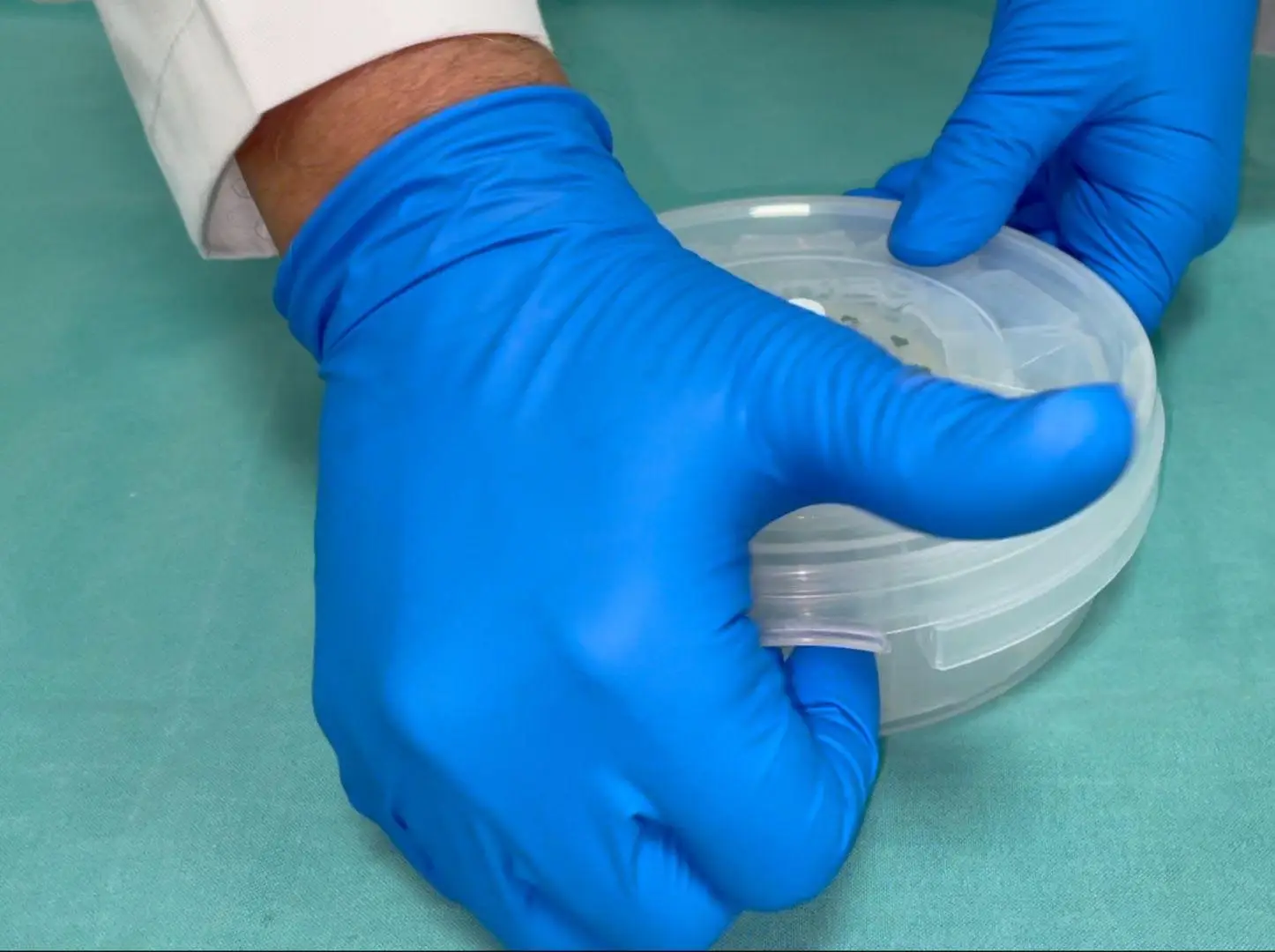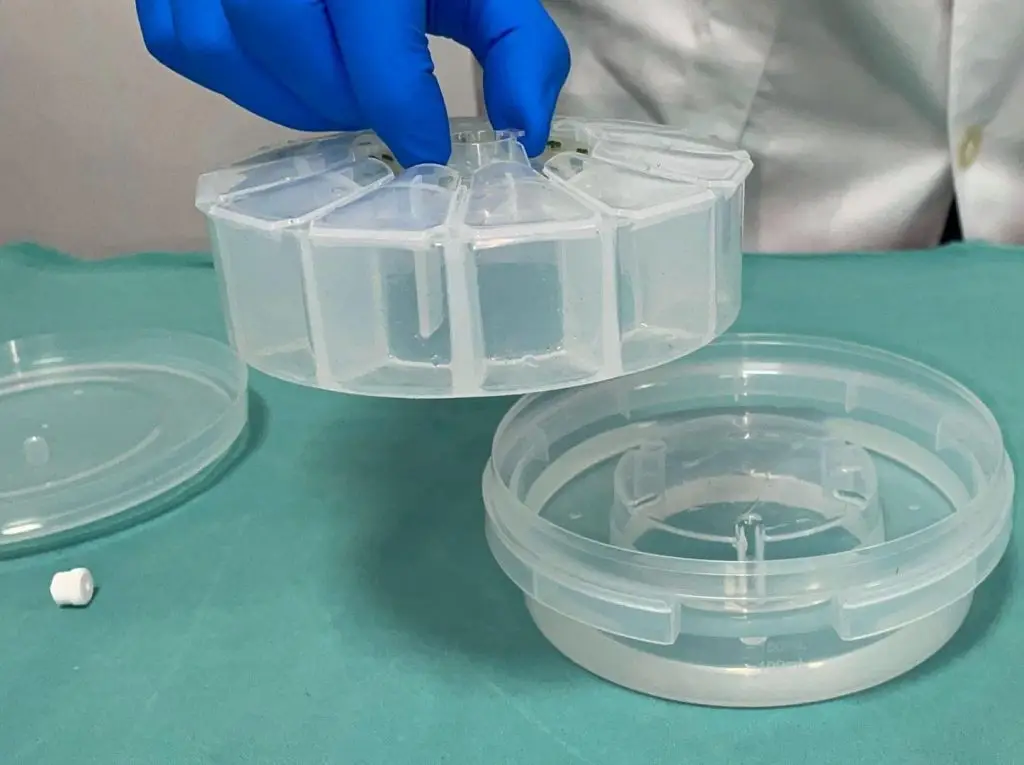
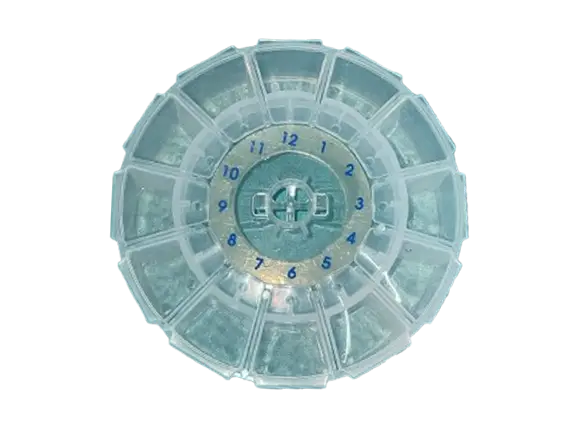
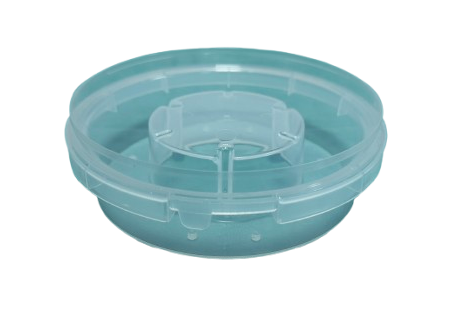
Container: This is the base of the device,
containing a pre-filled buffer solution.
It has central grooves for stable attachment
of the cylinder holder, as well
as a tamper-evident seal.
containing a pre-filled buffer solution.
It has central grooves for stable attachment
of the cylinder holder, as well
as a tamper-evident seal.
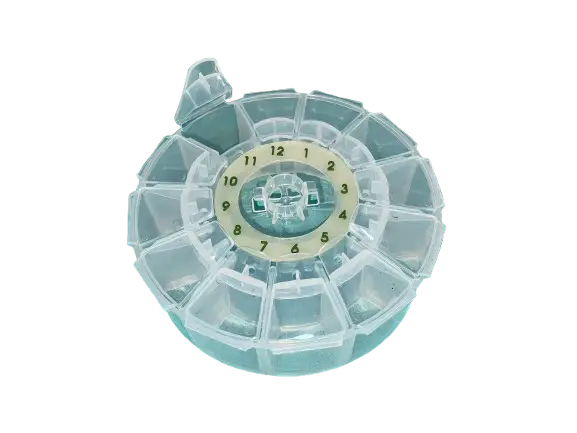
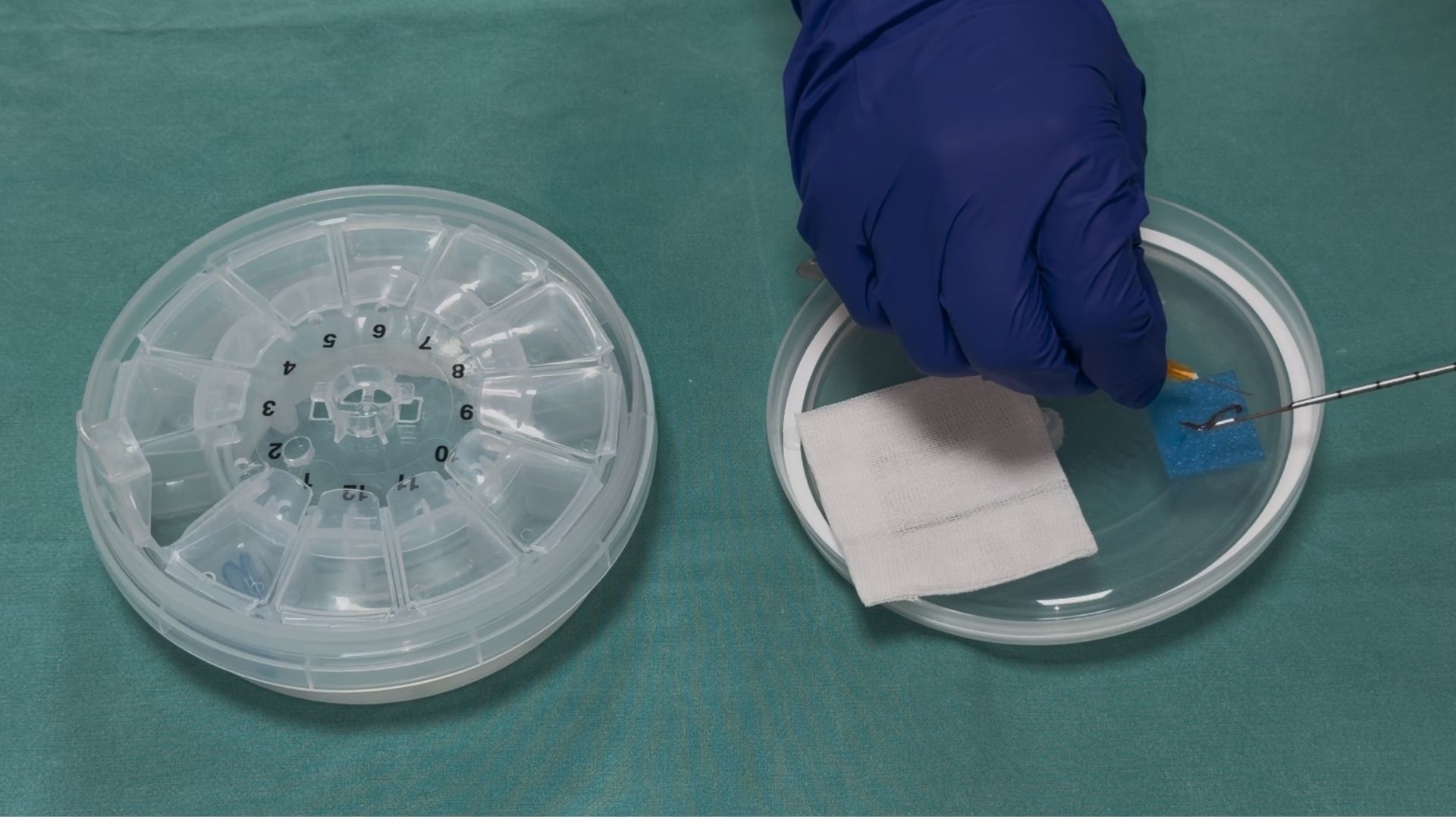
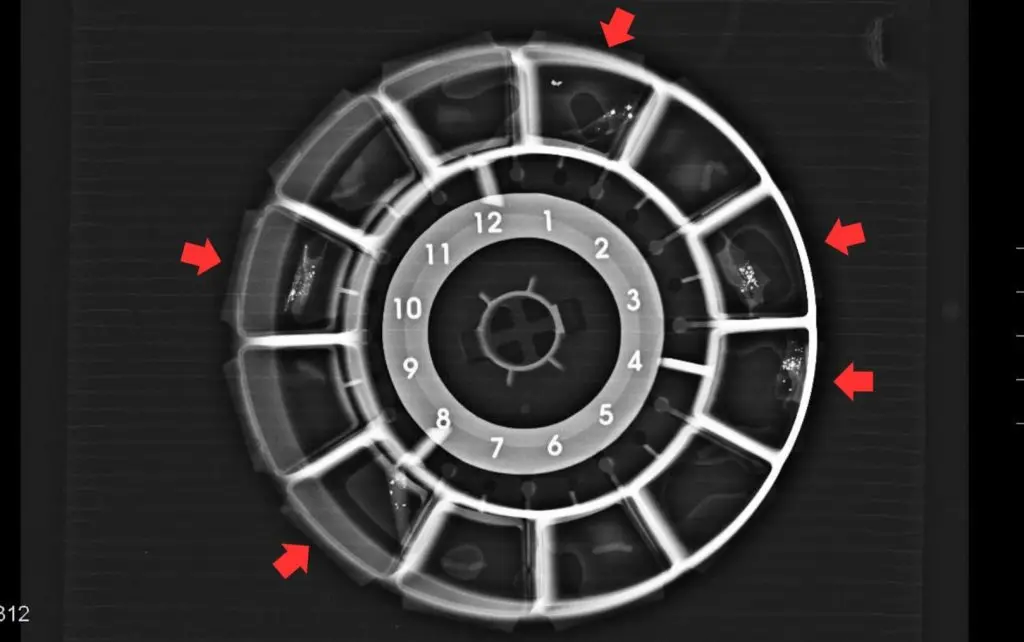
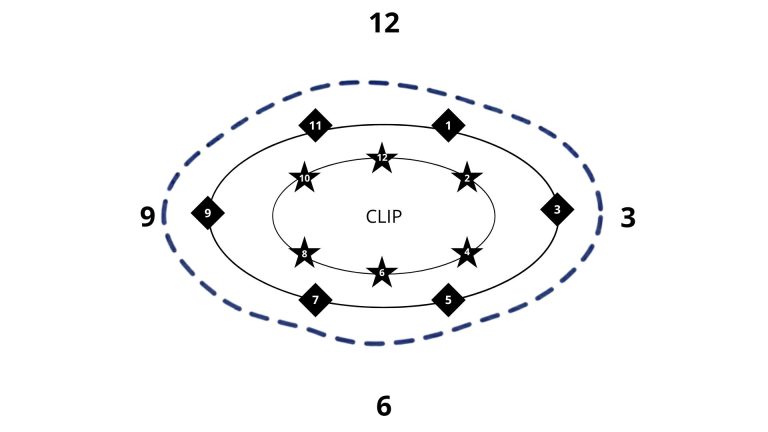
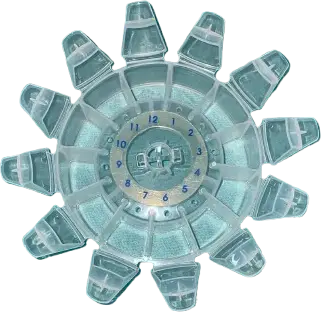
Cylinder holder: This is the key component with 12 numbered compartments.
It has a connecting tube that facilitates the flow of formaldehyde into the container.
The tabs allow the cylinder holder to be removed and the liquid to be emptied from the compartments.
It has a connecting tube that facilitates the flow of formaldehyde into the container.
The tabs allow the cylinder holder to be removed and the liquid to be emptied from the compartments.
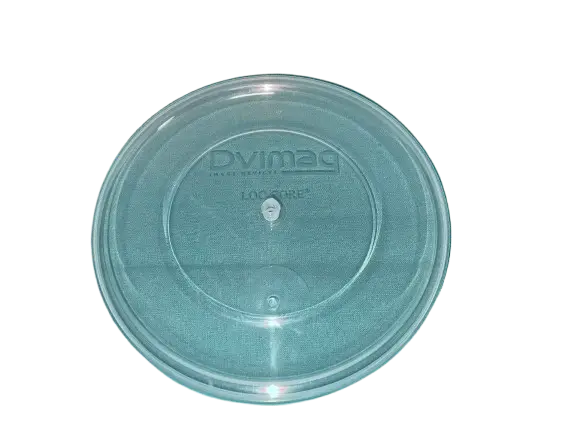
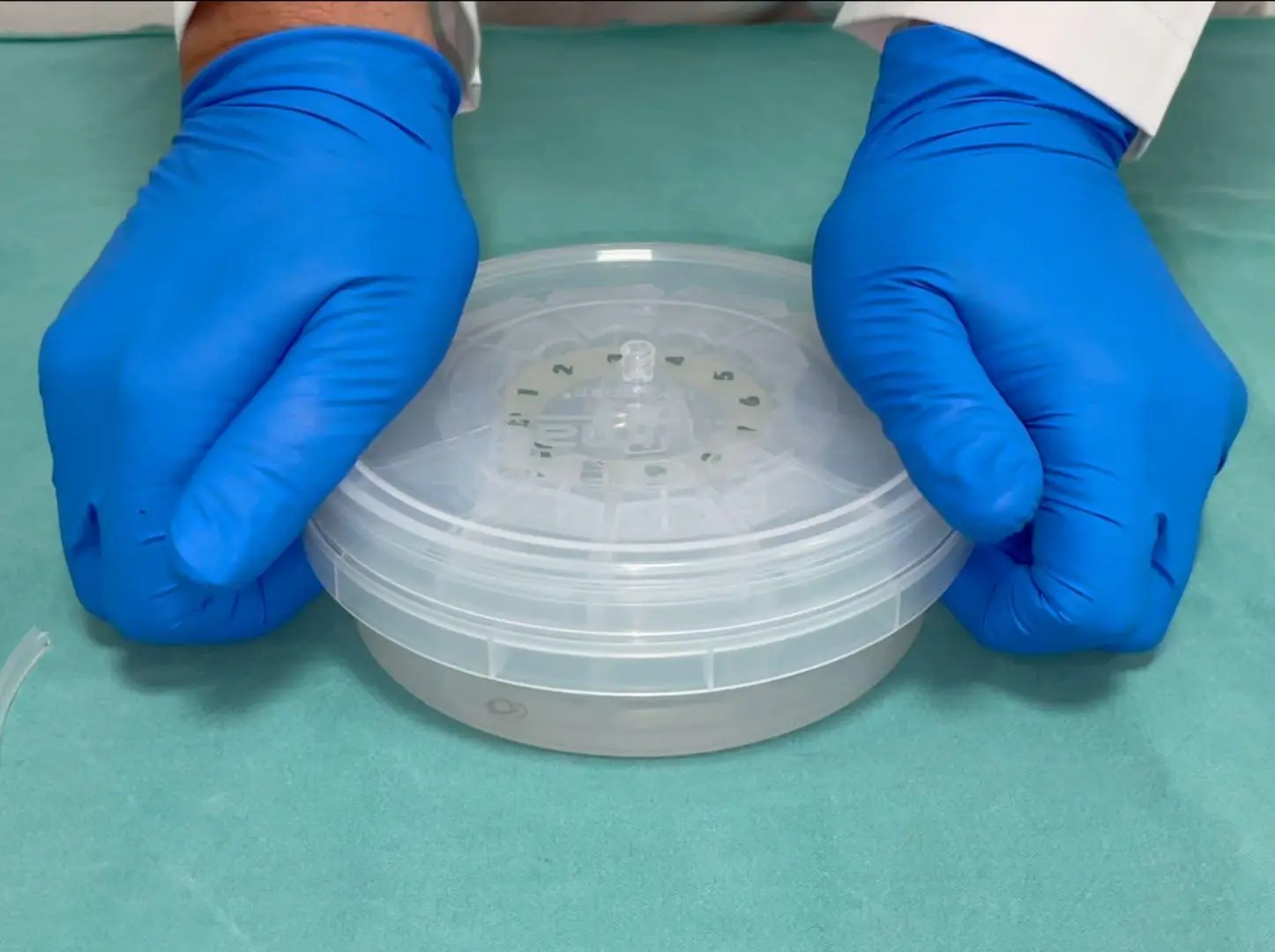
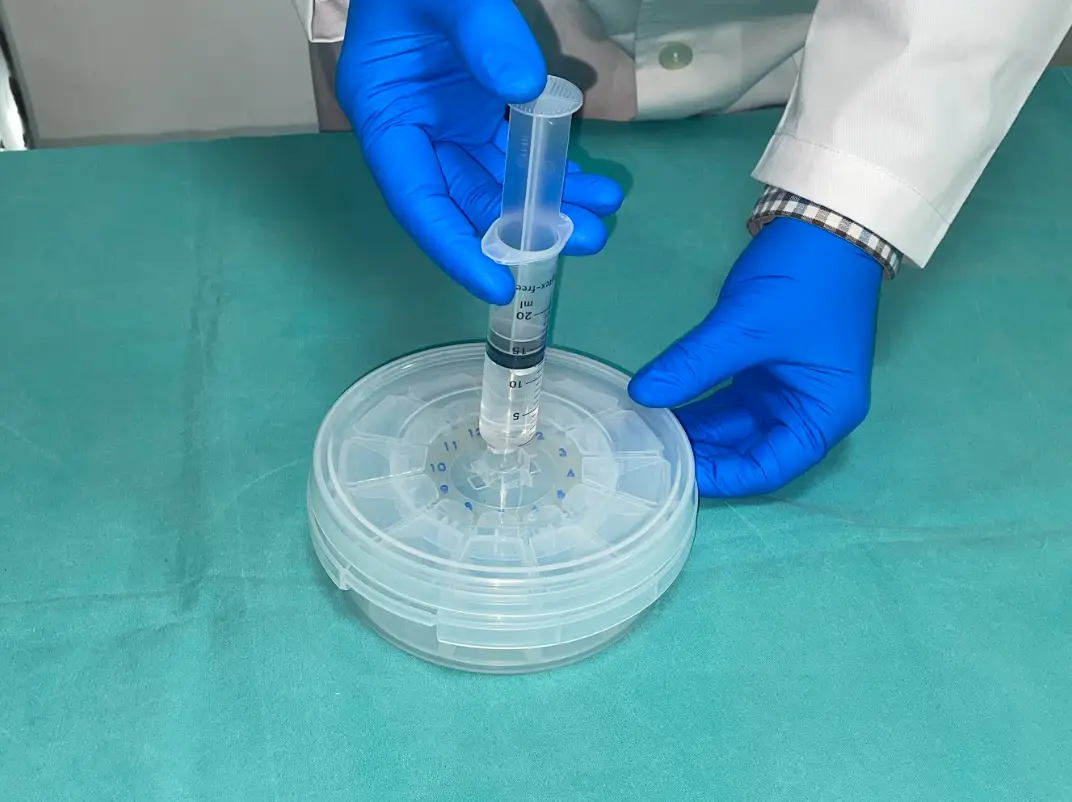
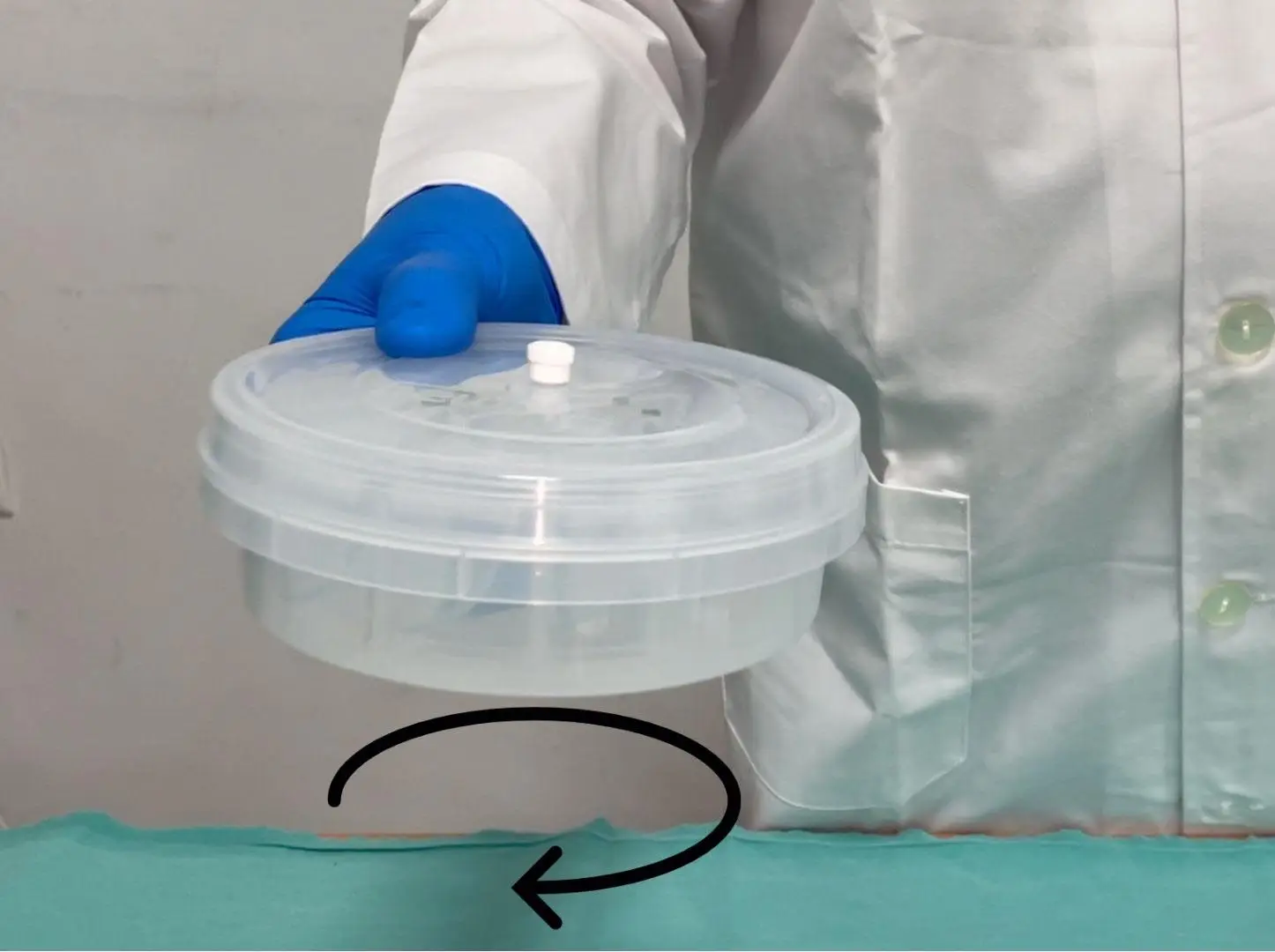
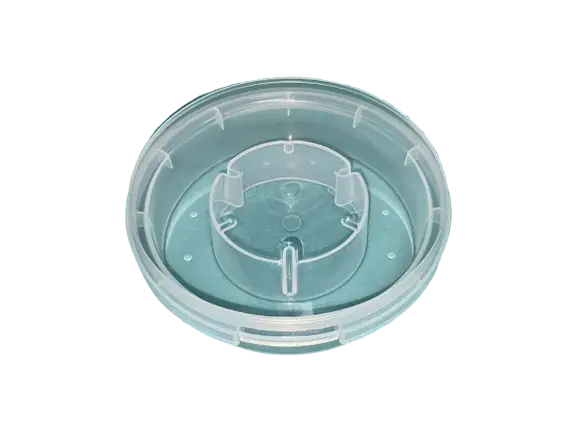
Lid: Ensures an airtight seal.
Incorporates a Luer-lock connector that allows for the
controlled introduction of formaldehyde without
opening the container.
Incorporates a Luer-lock connector that allows for the
controlled introduction of formaldehyde without
opening the container.
Container: This is the base of the device,
containing a pre-filled buffer solution.
It has central grooves for stable attachment
of the cylinder holder, as
well as a tamper-evident seal.
containing a pre-filled buffer solution.
It has central grooves for stable attachment
of the cylinder holder, as
well as a tamper-evident seal.
Cylinder holder: This is the key component
with 12 numbered compartments.
It has a connecting tube that facilitates the flow of
formaldehyde into the container.
The tabs allow the cylinder holder to be removed and the
liquid to be emptied from the compartments.
with 12 numbered compartments.
It has a connecting tube that facilitates the flow of
formaldehyde into the container.
The tabs allow the cylinder holder to be removed and the
liquid to be emptied from the compartments.
Lid: Ensures an airtight seal.
Incorporates a Luer-lock connector that
allows for the controlled introduction
of formaldehyde without opening the container.
Incorporates a Luer-lock connector that
allows for the controlled introduction
of formaldehyde without opening the container.
Recipiente: Es la base del dispositivo,
que contiene una solución Buffer de prellenado.
Dispone de ranuras centrales para un
acoplamiento estable del portacilindros.
Además de un precinto de seguridad.
que contiene una solución Buffer de prellenado.
Dispone de ranuras centrales para un
acoplamiento estable del portacilindros.
Además de un precinto de seguridad.
Portacilindros: Es la pieza clave con 12
compartimentos numerados. Dispone de un tubo conector que facilita
el paso del formol hacia el recipiente. Las pestañas permiten extraer el
portacilindros y vaciar el líquido de los compartimentos.
compartimentos numerados. Dispone de un tubo conector que facilita
el paso del formol hacia el recipiente. Las pestañas permiten extraer el
portacilindros y vaciar el líquido de los compartimentos.
Tapa: Asegura un cierre hermético.
Incorpora un conector luer-lock que permite
la introducción controlada del formol sin
necesidad de abrir el recipiente.
Incorpora un conector luer-lock que permite
la introducción controlada del formol sin
necesidad de abrir el recipiente.
Container: This is the base of the device,
containing a pre-filled buffer solution.
It has central grooves for stable attachment
of the cylinder holder, as well
as a tamper-evident seal.
containing a pre-filled buffer solution.
It has central grooves for stable attachment
of the cylinder holder, as well
as a tamper-evident seal.
Cylinder holder: This is the key component with 12 numbered compartments.
It has a connecting tube that facilitates the flow of formaldehyde into the container.
The tabs allow the cylinder holder to be removed and the liquid to be emptied from the compartments.
It has a connecting tube that facilitates the flow of formaldehyde into the container.
The tabs allow the cylinder holder to be removed and the liquid to be emptied from the compartments.
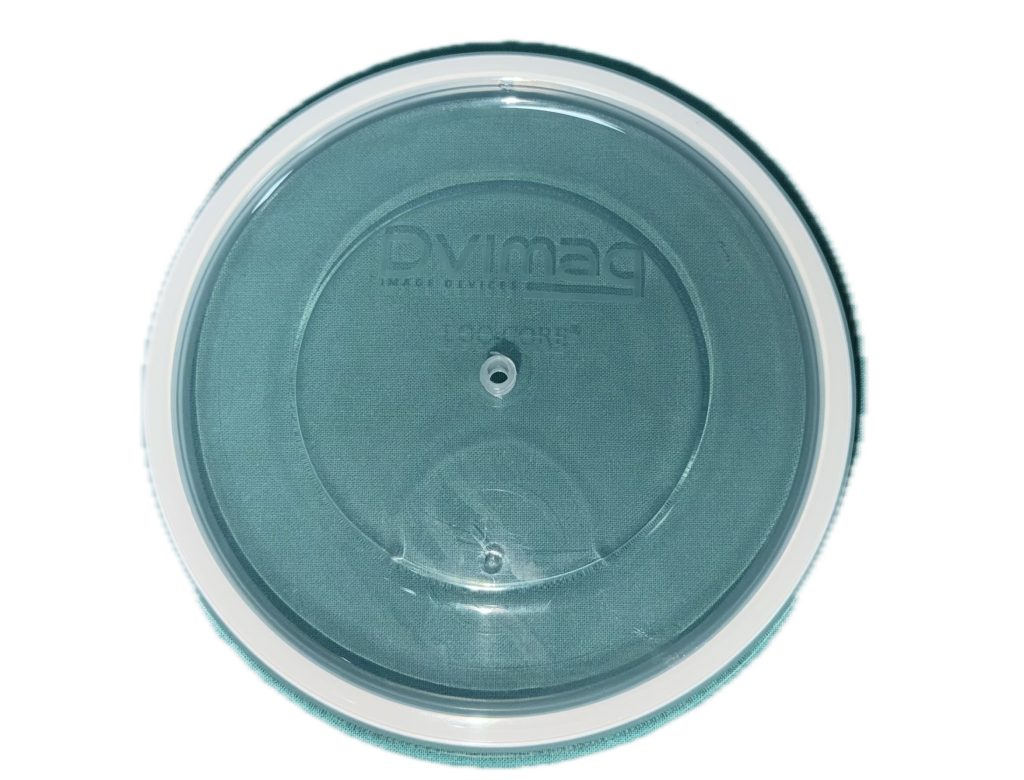
Lid: Ensures an airtight seal.
Incorporates a Luer-lock connector that allows for the
controlled introduction of formaldehyde without
opening the container.
Incorporates a Luer-lock connector that allows for the
controlled introduction of formaldehyde without
opening the container.